← Back to Dashboard

Blog

Stories behind the footwear trends from the Musialik Insights dashboard.

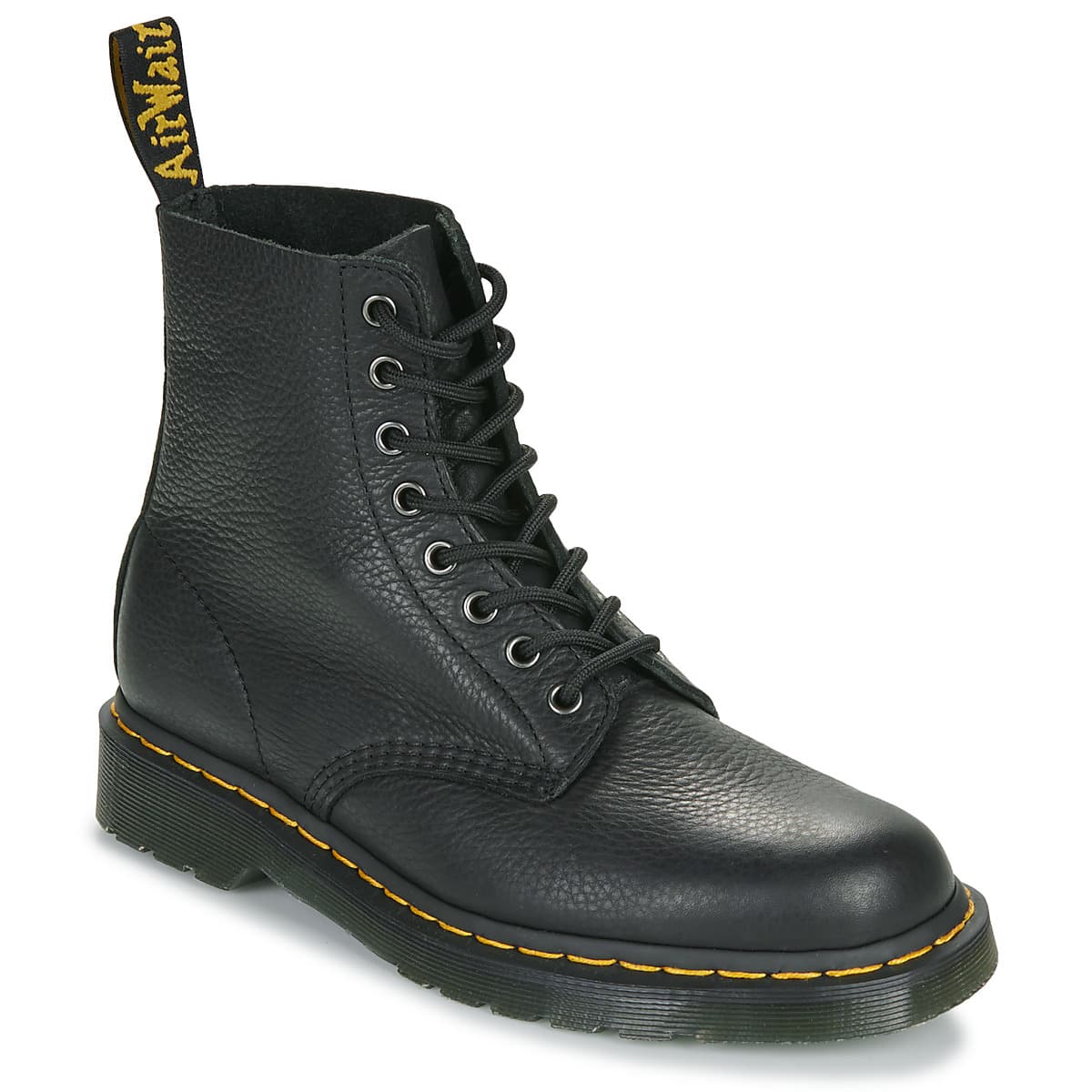
Dr. Martens 1460: From Teenage Armor to a Year of Pivot

Dr. Martens 1460 black leather boot with yellow stitching

In a cluttered bedroom in Camden Town, north London, fourteen-year-old Chloe is performing a rite of passage: the ritualistic lacing of her first pair of “1460s.” The leather is unyielding, and her heels will likely be bleeding before the end of her lunch break, but for her, the discomfort is the point. “They make me feel like I can take on anything,” she says, adjusting a patch on her vintage denim jacket. To Chloe, the boots are a shield against the ephemeral whims of fast fashion. To the board of Dr. Martens, however, Chloe is a data point that is beginning to deviate from the mean.

While teenagers in London still covet the distinctive yellow stitching, their counterparts in America are increasingly opting for the cushioned convenience of sneakers. This shift in gait has left the British icon limping. Since its debut on the London Stock Exchange in 2021, Dr. Martens has seen its market value wither by more than two-thirds. Under its new CEO, Ije Nwokorie, the company has declared 2026 a “year of pivot,” moving away from a channel-first mindset toward a “consumer-first” strategy. Yet, as e-commerce sales slide and the “K-shaped” recovery in the US leaves cost-conscious buyers wary, selling rebellion as a scalable, quarterly-dividend-paying product is proving to be a business every bit as painful as breaking in a fresh pair of eight-eyelet boots.

Onitsuka Tiger Mexico 66: The Octopus That Changed Sneakers

Onitsuka Tiger Mexico 66 yellow sneaker with black stripes

Walk through the quieter, more discerning corners of East London or Tokyo’s Daikanyama, and you will notice a persistent, if understated, silhouette. Amidst the neon bulk of modern athleisure, the slim, leather profile of an Onitsuka Tiger remains a constant for a certain type of urbanite—one who prefers the quiet authority of heritage over the loud ephemeralness of hype. To the casual observer, it is merely a vintage fashion choice. To the student of global commerce, it is a relic of a post-war miracle that refused to go extinct.

This modern preference for the “Mexico 66” is not merely about aesthetics; it is a retreat into reliability. While today’s sneaker market is driven by artificial scarcity and celebrity endorsements, the origins of these four intersecting stripes were purely functional. In 1951, Kihachiro Onitsuka, a veteran seeking to revive the spirit of Japanese youth through sport, sat contemplating a piece of octopus salad at his dinner table.

He was struck by the defiant suction of a tentacle against the ceramic rim. To a hungry man, it was a meal; to Mr. Onitsuka, it was the friction needed for a basketball court. By applying this “suction-cup” principle to a rubber sole, he did not just prevent slips—he created the blueprint for a technical empire.

That empire eventually caught the eye of a young American, Phil Knight, whose distribution of these Japanese trainers would lead to the birth of Nike. But while the “Swoosh” went on to conquer the mass market through marketing muscle, the heirs of Mr. Onitsuka—now known as ASICS—stuck to monozukuri: the obsessive, quiet pursuit of technical perfection. In an era of disposable trends, the Tiger remains a testament to the idea that true longevity often begins with a single, quiet observation of the mundane.

New Balance 574: The Chicken Foot That Rewired Stability

New Balance 574 blue and yellow sneakers

Most people assume it’s just a clever marketing slogan about balancing sports and lifestyle. However, the truth is much more backyard than you might think, dating all the way back to 1906.

It was then that the brand’s founder, William Riley, began observing the anatomy of a chicken’s foot. He noticed that the three-point support system used by chickens provided perfect stability. This became his blueprint for creating the first-ever arch supports for human shoes. Riley was so proud of this discovery that he reportedly kept a chicken’s foot on his desk to show customers the science behind it. He wanted to give people a “New Balance” by literally mimicking the stability nature gave to chickens. That is exactly where the name comes from.

That’s how New Balance was born. Fast forward 120 years, and that same philosophy of stability dominates our streets through iconic models like the 574.